B2B Lifecycle Communication Optimisation
Design Systems
Lifecycle emails
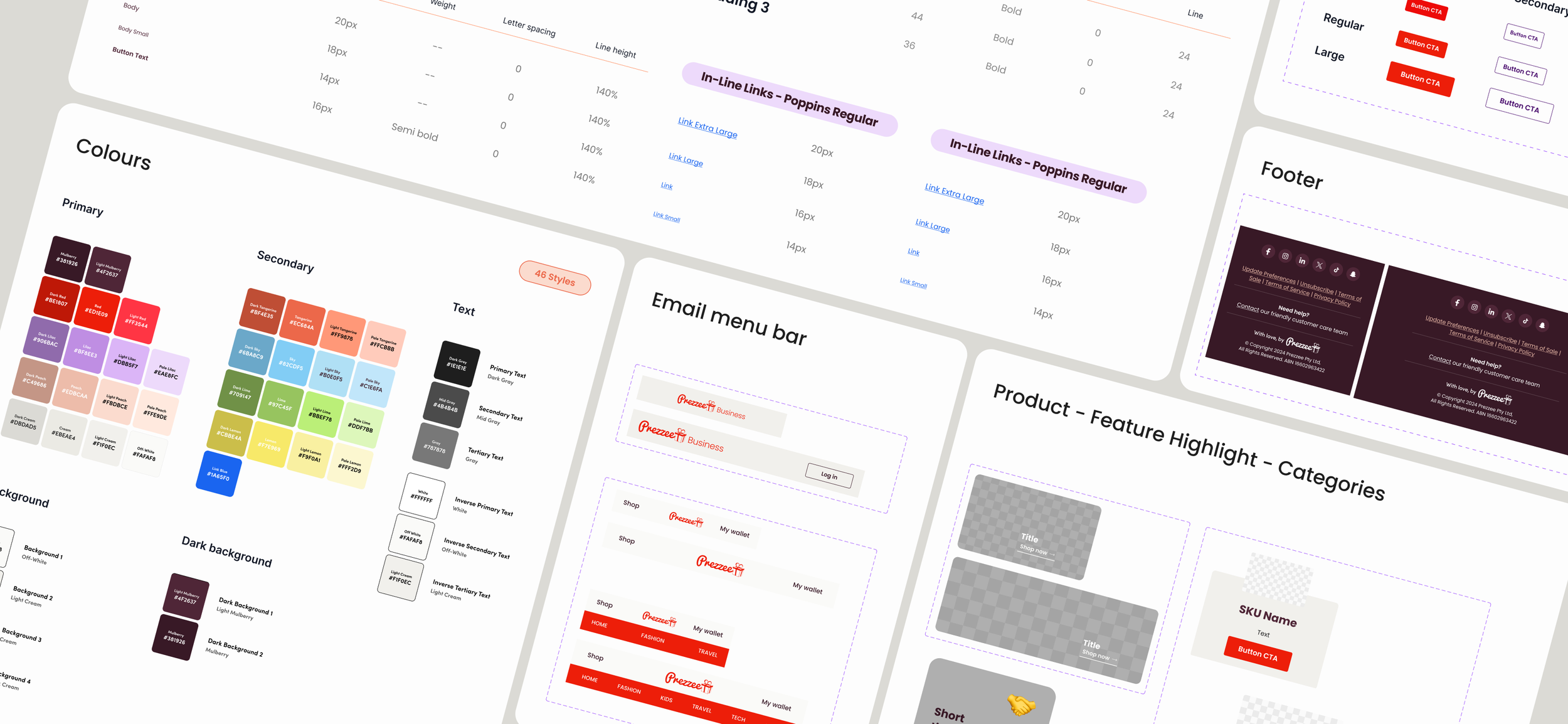
Component library
My role
I led the design and roll out of a global email design system used across AU, UK and US markets, improving consistency and reducing production time across lifecycle communications.
The problem
Prezzee’s B2B lifecycle communications had grown fragmented over time and were visually inconsistent and no longer aligned with the evolving brand.
Copy lacked clarity and confidence, creating friction during a critical customer moment
Emails varied significantly across regions, making the experience feel disjointed
Designers were recreating emails from scratch, slowing delivery and increasing inconsistency
The approach
I started by auditing the full B2B onboarding lifecycle across regions, reviewing existing emails for visual consistency, hierarchy, and brand alignment, as well as assessing copy tone, clarity, and duplication. I mapped the onboarding journey to uncover friction points and overlaps, gathered input from Sales to understand recurring customer questions, and worked closely with the MarTech specialist to align on technical constraints and responsive behaviour.
Instead of treating this as a one-off redesign, I tackled two connected problems at once. Rather than redesigning emails individually, I structured the solution in two deliberate phases:
Phase 1 - Design system
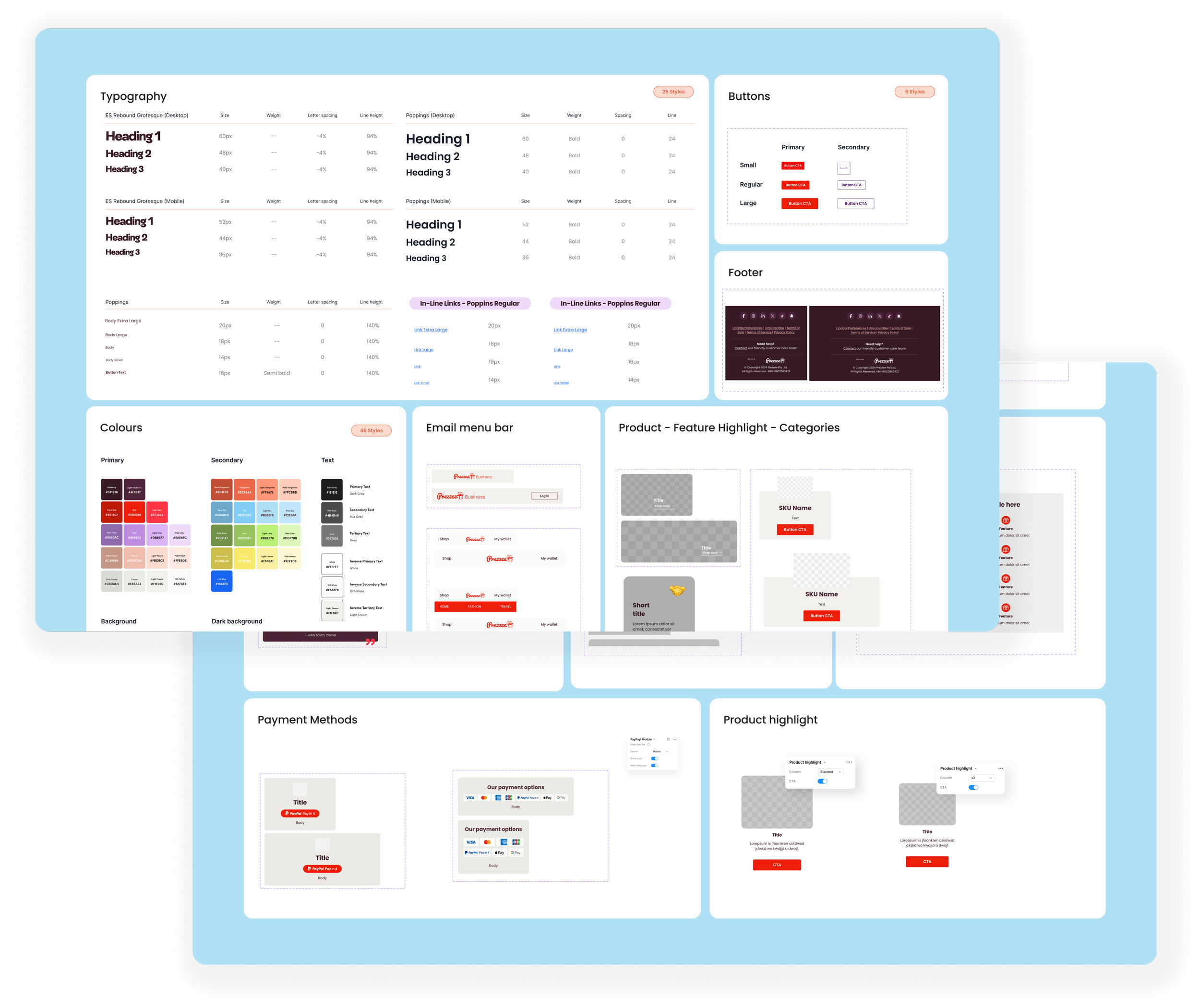
I built a modular email design system in Figma that could be shared and applied globally across all three markets. Rather than designing for a single use case, I built it around real email constraints like responsive components, consistent spacing and typography rules, and flexible layouts that held up across different lifecycle stages, regions and devices.
The goal was a system that any designer could pick up and use without starting from scratch.
Phase 2 - B2B onboarding journey redesign
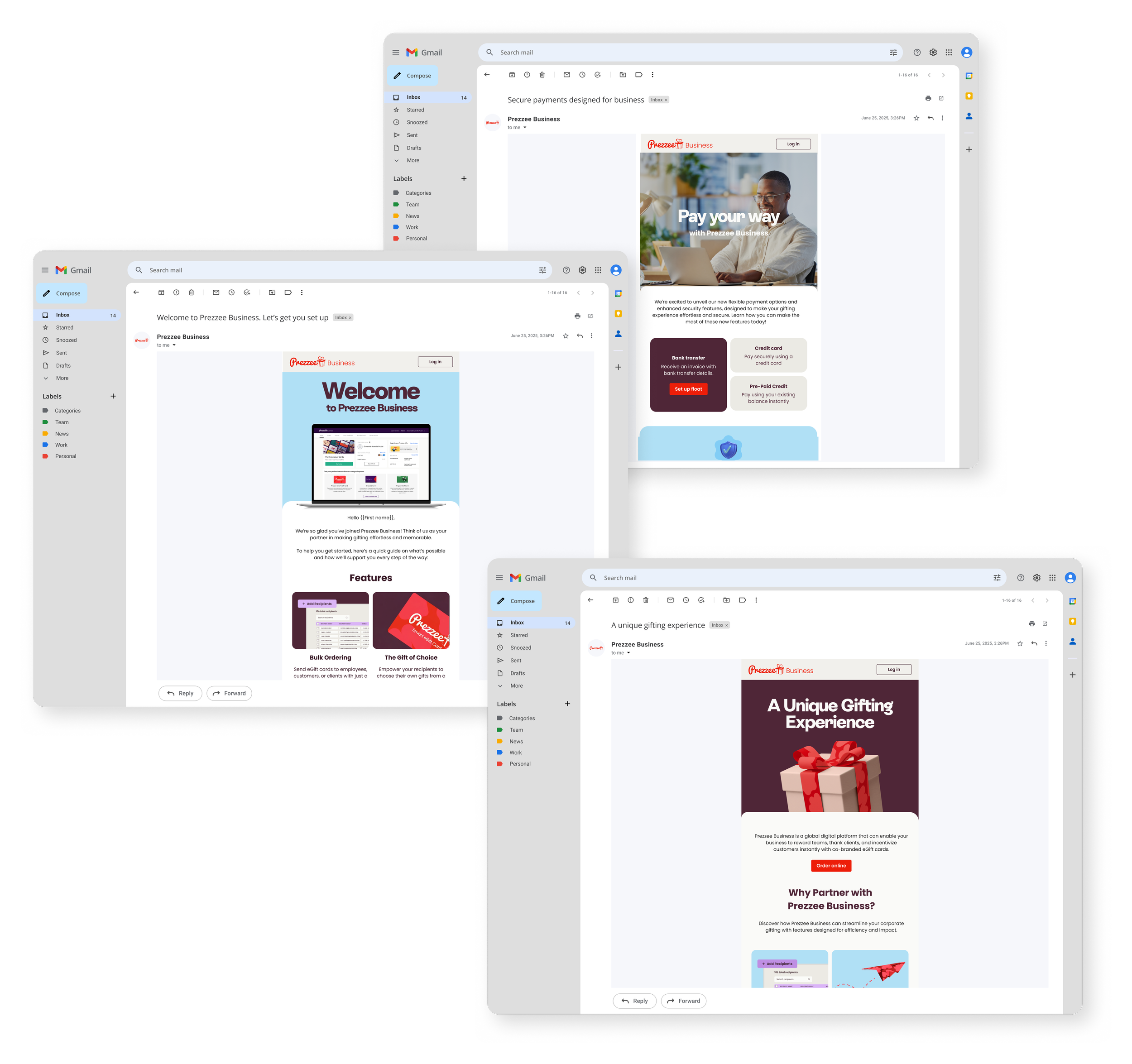
With the system in place, I redesigned the full onboarding sequence from the ground up. Copy was rewritten to be clearer and more confident, visual hierarchy was standardised across every touchpoint, and the sequence itself was restructured from 12 emails down to 5.
The focus was on making each email feel like part of a connected journey rather than a standalone message.
Once the system was live, I ran a training session with designers across regions to introduce the component library and show how it could be applied beyond onboarding.
Impact & Insights
The results were measured 6 months after the launch of the series.
A leaner, healthier program
The redesigned program reduced the sequence to 5 emails (58% leaner) while maintaining 85% delivery rate through the final touchpoint. That’s a +38% improvement.
Insight:
A shorter, better-structured sequence improved domain health and ensured more customers actually received the full value proposition, rather than dropping off before the journey concluded.
Eliminating engagement drop-offs
The previous program had clear engagement drop-offs. Some emails recorded abnormally low CTORs (as low as 0.86% and 1.49%), indicating content that failed to drive meaningful action.
Insight:
By refining hierarchy, clarity, and messaging, the redesign removed weak touchpoints and replaced them with focused, action-driven communication. Even the lowest-performing email in the new sequence outperformed the weakest emails in the legacy program by nearly 4x.
Reduced skip friction
In the legacy sequence, skip rates escalated quickly, reaching 53% by the final email. This suggested either overly complex automation logic or misalignment between content and user intent.
The new program maxes out at a 15% skip rate, indicating much stronger targeting alignment and improved journey pacing.
Insight:
The redesigned lifecycle better reflects real user behaviour. Rather than overwhelming or over-segmenting, the new structure respects the user’s progression and reduces friction in the funnel.
Overall outcome
The redesign delivered a 58% leaner sequence, a 38% improvement in final delivery rate, and reduced skip rates from 53% to 15%.
Moving from one-off email redesigns to a scalable global system created long-term value that extended well beyond the onboarding journey.